
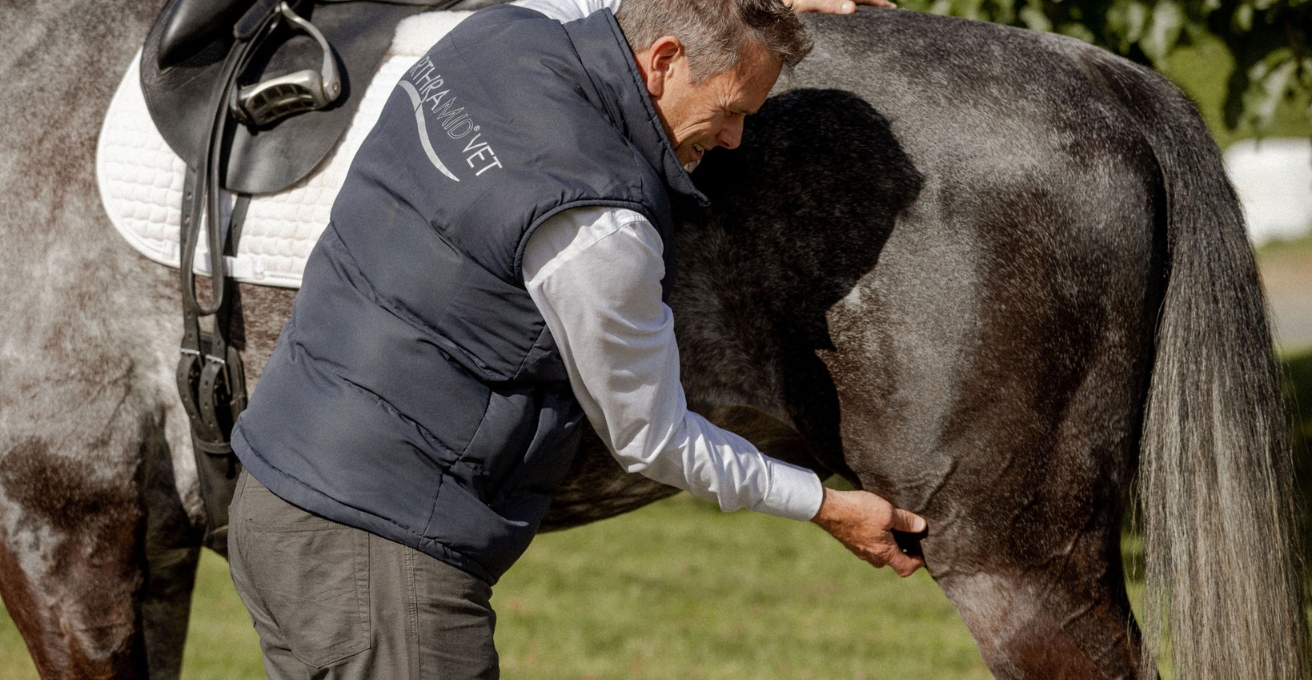
By Dr Jason Lowe BVSc
Understanding Stifle Lameness in Horses
The equine stifle is one of the largest and most complex joints in the horse. Unlike the fetlock, hock, pastern or coffin joint, the stifle contains multiple joint compartments, extensive soft tissue structures, menisci, cruciate ligaments and patellar ligaments that must all function together to maintain athletic performance.
Because of this complexity, stifle lameness can be one of the most frustrating conditions for horse owners, riders and veterinarians alike.
Whether your horse competes in dressage, eventing, showjumping, racing, reining, polo or pleasure riding, healthy stifles are essential for:
- Propulsion and impulsion
- Hindlimb engagement
- Collection
- Jumping ability
- Athletic longevity
In recent years, advances in imaging and a better understanding of joint biology have dramatically improved our ability to diagnose and manage stifle disease. At the same time, treatments such as Arthramid® Vet (2.5% iPAAG) have expanded the options available for maintaining long-term joint health.
Why Is the Stifle So Challenging?
The equine stifle is broadly equivalent to the human knee.
It consists of three separate compartments:
- Femoropatellar joint
- Medial femorotibial joint
- Lateral femorotibial joint
Communication between compartments is variable, meaning disease can exist in one compartment without affecting another. This is one reason accurate diagnosis is so important.
Unlike many other joints, stifle lameness commonly involves both bone and soft tissue structures including:
- Menisci
- Meniscal ligaments
- Cruciate ligaments
- Collateral ligaments
- Patellar ligaments
- Articular cartilage
- Synovial membrane
- Joint capsule
Damage to any of these structures can result in pain, instability and progression of osteoarthritis.
Signs of Stifle Pain in Horses
Many horses with stifle disease do not show obvious swelling or severe lameness initially.
Instead, owners often report:
- Reduced impulsion
- Reluctance to engage behind
- Difficulty with transitions
- Poor canter quality
- Unusual gait or limb flight behind
- Difficulty maintaining lead changes
- Reluctance to jump
- Loss of performance
- Hindlimb lameness
- Difficulty working on circles
- Stiffness after exercise
Clinical examination frequently reveals pain on upper limb flexion and may demonstrate joint effusion, particularly of the femorotibial joints.
Why Early Diagnosis Matters
One of the most important lessons emerging from modern sports medicine is that significant pathology may exist before major radiographic abnormalities become apparent.
This is particularly true in the stifle.
Radiographs remain essential, but many important lesions involve soft tissues that cannot be adequately visualised on x-rays. These include:
- Meniscal tears
- Meniscal ligament injuries
- Cruciate ligament injuries
- Synovitis
- Capsulitis
- Early cartilage disease
Ultrasonography remains one of the most valuable diagnostic tools for evaluating these structures and is often performed even when radiographs appear normal.
Increasingly, advanced imaging techniques are also being utilised, including MRI, CT arthrography and standing arthroscopy. These technologies can identify pathology not visible using conventional imaging methods.
Meniscal Injuries: The Most Common Soft Tissue Problem
Meniscal injuries are among the most frequently diagnosed causes of stifle lameness.
Most occur within the medial femorotibial joint and may range from acute, severe injuries to chronic low-grade performance problems.
Ultrasound commonly identifies:
- Longitudinal tears
- Horizontal tears
- Meniscal degeneration
- Meniscal protrusion
- Distortion of normal fibre pattern
Historically, meniscal injuries carried a guarded prognosis, particularly in sport horses. Treatment often centred around arthroscopic debridement of damaged tissue. However, growing evidence suggests that biologic and intra-articular therapies may play an increasingly important role in improving outcomes.
Osteoarthritis of the Stifle
Like other equine joints, osteoarthritis is not simply a disease of cartilage.
The modern view recognises osteoarthritis as a disease affecting the entire joint organ, including:
- Synovial membrane
- Joint capsule
- Articular cartilage
- Subchondral bone
- Menisci
- Ligaments
Radiographic findings may include:
- Osteophyte formation
- Subchondral sclerosis
- Bone resorption
- Joint remodelling
- Subchondral cystic lesions
Importantly, MRI and CT have demonstrated that substantial pathology can exist before advanced radiographic changes become evident.
This is one reason many veterinarians are placing greater emphasis on earlier diagnosis and intervention.
The Role of Synovitis and Capsulitis
A consistent theme emerging across all major equine joints is the importance of synovitis and capsulitis.
The stifle is no exception.
Chronic inflammation of the synovial membrane and joint capsule contributes to:
- Pain
- Joint effusion
- Reduced mobility
- Progressive osteoarthritis
- Continued deterioration of soft tissue structures
Modern diagnostics highlights that chronic synovitis and capsulitis can even result in characteristic bony remodelling around the femoral condyles. Ultrasound is particularly valuable for identifying joint capsule thickening, synovial proliferation and effusion associated with these processes.
This understanding has influenced how veterinarians now approach long-term joint management.
How Arthramid® Fits Into Modern Stifle Management
As our understanding of osteoarthritis has evolved, so too has our approach to intra-articular therapy.
Arthramid® is a 2.5% injectable polyacrylamide hydrogel (iPAAG) consisting of 97.5% water and 2.5% cross-linked hydrogel. Following injection, it integrates into the synovial membrane and surrounding soft tissues.
Rather than describing it as a “scaffold”, it is more accurate and owner-friendly to think of Arthramid® as creating a permanent biocompatible support matrix within the joint lining.
Over time this integration helps support:
- Synovial membrane function
- Joint capsule integrity
- Joint fluid quality
- Soft tissue resilience
- More normal joint biomechanics overall
Because synovial membrane health is increasingly recognised as central to long-term joint function, Arthramid® aligns well with contemporary approaches to osteoarthritis management.
Clinical Experience With Arthramid® in Stifle Disease
Although published studies are extensive for coffin joints, fetlocks, hocks and other joints, published reports regarding stifle disease remain limited.
However, one of our own published case report demonstrated successful management of a horse with a medial meniscal tear using a single intra-articular injection of Arthramid® into the medial femorotibial joint. The horse became sound, ultrasound changes improved over time and the horse returned to full competition at its previous level within six months.
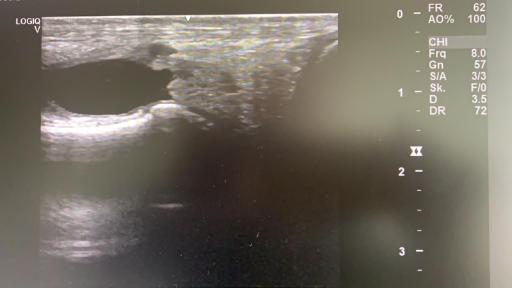
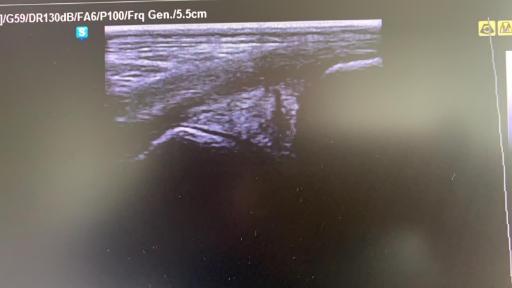
The report concluded that Arthramid® offered a viable therapeutic alternative for stifle lameness associated with meniscal injury while highlighting the need for larger clinical studies.
Importantly, this aligns with a broader shift in equine medicine toward supporting soft tissue healing and joint health, rather than focusing solely on short-term pain relief.
A Practical Approach to Managing Stifle Lameness
Successful management of stifle disease typically requires a combination of:
- Accurate diagnosis
- Diagnostic analgesia
- Radiography
- Ultrasonography
- Advanced imaging when indicated
- Rehabilitation and controlled exercise
- Weight management
- Appropriate farriery
- Intra-articular therapy
No single treatment works in isolation.
The best outcomes occur when therapy is based on an accurate understanding of the specific structures involved and the stage of disease present.
Long-Term Joint Health Is the New Goal
Historically, treatment decisions were often driven by one question:
“How quickly can we get this horse back to work?”
Increasingly, owners and veterinarians are asking:
“How do we preserve this horse’s athletic career and joint health for years to come?”
That subtle change in philosophy has transformed equine sports medicine.
For many horses with stifle disease, especially those with synovitis, capsulitis, osteoarthritis or selected soft tissue injuries, the objective is no longer simply to suppress symptoms. The goal is to support the biological structures responsible for healthy joint function and long-term soundness.
That is exactly where therapies such as Arthramid® are finding an increasingly important role.
