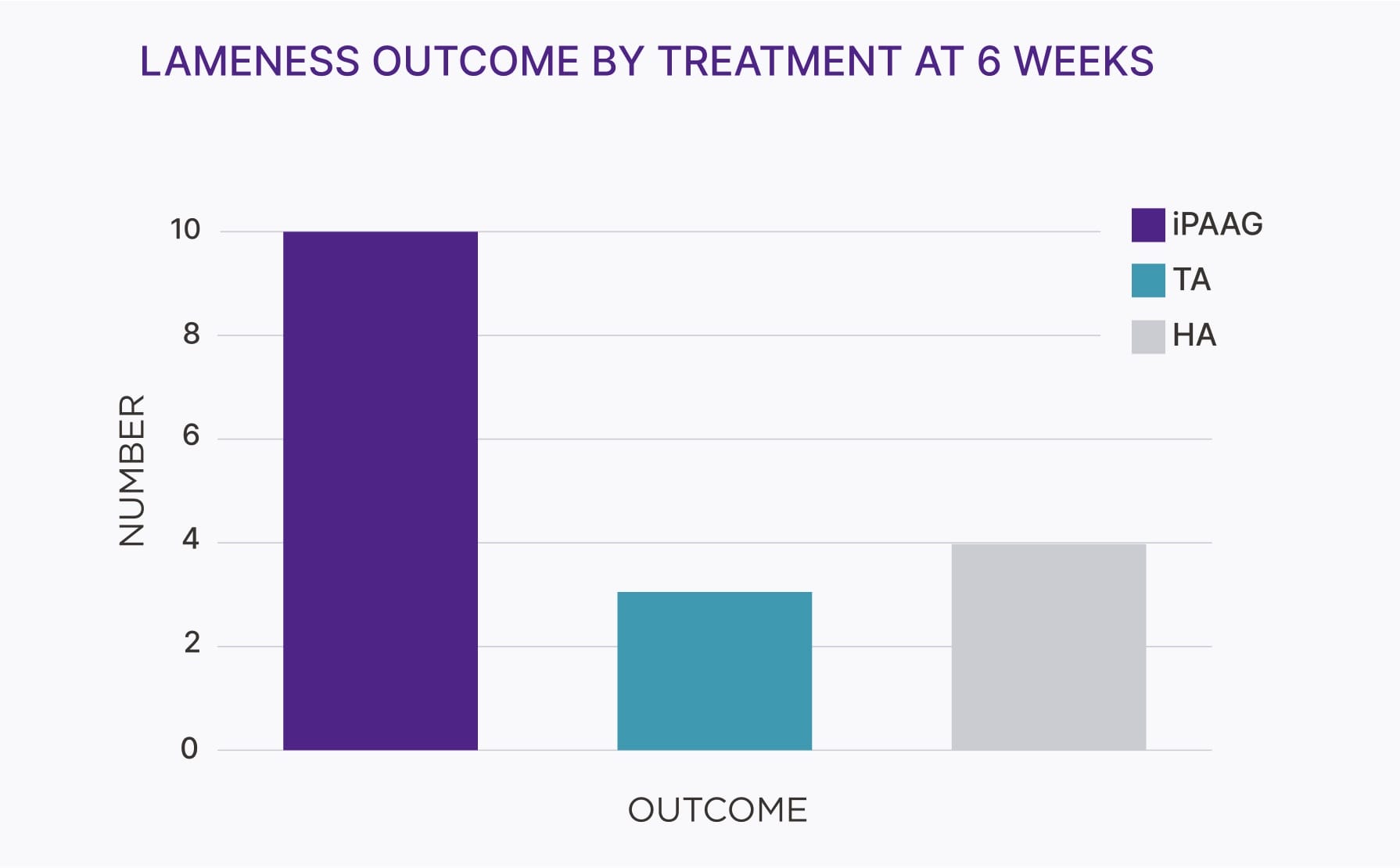
Comparison of 2.5% iPAAG versus Triamcinolone (TA) and Hyaluronic Acid (HA) in a double-blinded positive control study JEVS 107 (2021) in horses showing 83.3% successful resolution of lameness at 6 weeks in Arthramid treated group.

Clinical Evidence Supporting Arthramid

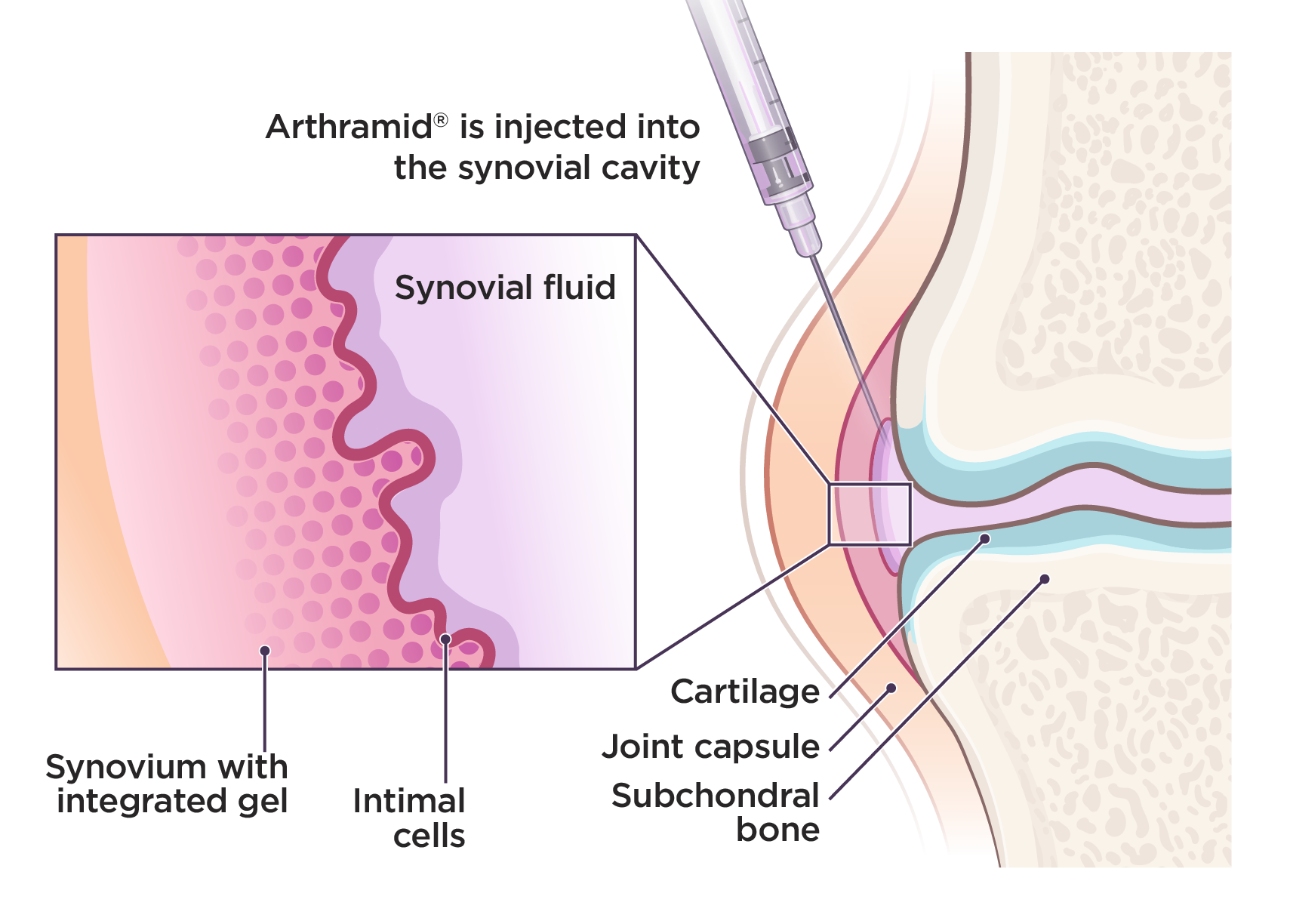
Arthramid 2.5% iPAAG is a patented injectable polyacrylamide hydrogel designed to integrate into the synovial membrane following intra-articular injection, helping support synovial function and long-term joint health.

In a double-blinded positive control study published in JEVS (2021), Arthramid achieved an 83.3% successful lameness resolution rate at 6 weeks, compared with 27.3% for triamcinolone acetonide and 40% for hyaluronic acid.

Clinical findings have also demonstrated reduced joint effusion, decreased stiffness, and sustained clinical improvement following a single injection.

Arthramid offers a non-steroidal approach to equine osteoarthritis management through synovial membrane integration.

Review Clinical Studies

Joint After Administration of Arthramid

The Synovial Membrane Matters

Supporting joint health starts with the synovium

The synovial membrane produces the fluid responsible for joint lubrication, shock absorption, and cartilage support.

When synovial health becomes compromised, inflammatory changes within the joint can contribute to synovitis, capsulitis, osteoarthritis, and ongoing lameness.

Arthramid is designed to integrate into the synovial membrane following intra-articular injection, supporting joint homeostasis.

LEARN MORE
Arthramid for veterinarians

How Arthramid Works

Arthramid® 2.5% iPAAG is designed to integrate into the synovial membrane following intra-articular injection, with integration demonstrated within approximately 14 days.

Once integrated, Arthramid helps support synovial function by:

Reinforces Synovial Integrity
Supports synovial membrane integrity following injection.

Supports Joint Function
Helps improve elasticity and synovial fluid quality.

Supports Long-Term OA Management
Supports ongoing joint homeostasis and lameness management.

By supporting joint homeostasis, Arthramid assists in the long-term management of equine osteoarthritis and associated lameness.

Dr Leigh de Clifford

Product Overview & Clinical Guidance

with Dr Leigh de Clifford
Watch video

Case Selection

Arthramid may be considered in cases where osteoarthritis or synovitis has been confirmed and localised to a synovial joint through diagnostic analgesia or imaging.

Clinical applications may include:

  • acute and chronic osteoarthritic conditions
  • confirmed synovitis affecting synovial joints
  • cases where reduction of corticosteroid use is clinically desirable
  • multi-joint treatment where clinically appropriate

Arthramid is not indicated for sacroiliac disease, active infection, fractures, or unstable pathology.

CONTACT US

Frequently Asked Questions

What are the right cases for Arthramid?

Arthramid can be used in any synovial joint showing signs of osteoarthritis, including
pain, swelling, reduced range of motion, or lameness confirmed by diagnostic imaging
like X-rays, ultrasound, or MRI. It is effective in both early stages (e.g., synovitis and
capsular stiffness) and advanced or chronic cases of OA.

Before injection, it is important to review the animal’s medical history, including any
signs of infection, current medications, recent surgeries, or fractures, to ensure safe
and appropriate use.

How is Arthramid administered?

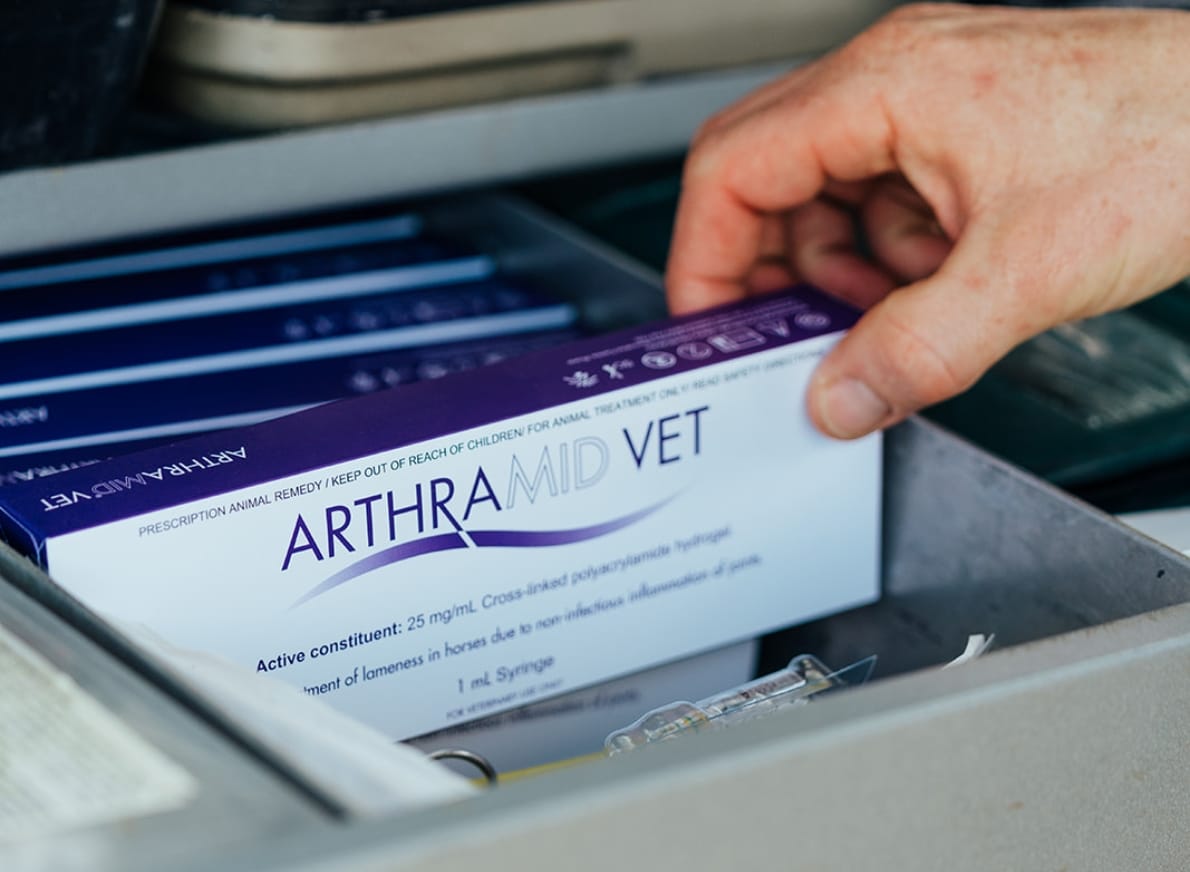
Arthramid comes in prefilled sterile 1 mL syringes, sealed via Luer lock fitting. Arthramid should be administered via a sterile 18-23g needle using aseptic injection technique protocols.

Post-treatment recommendations

After treatment, rest the horse for 48 hours and plan a reduced-impact workload for up to 2 weeks to allow full integration of the 2.5% iPAAG. A follow-up examination at 4 to 6 weeks is advised to assess the response, with a top-up dose administered if needed.
Horses often show gradual improvement in lameness within the first week, with continued progress over the following weeks. Repeat doses of Arthramid can be safely given every 6 to 12 months if required and clinically indicated.

Dosage recommendations

Arthramid is for intra-articular injection only. The dose may vary depending on the severity of disease, the size of the joint and the duration of clinical signs. The following recommendations have been made based on observed clinical responses to treatment.

Distal Interphalangeal: 1-2mL
Proximal Interphalangeal: 1 mL
Metacarpo/Tarso-phalangeal: 2 mL
Carpus: 2-3mL
Tarsometatarsal/ Distal Intertarsal: 1 mL
Tarsocrural: 2-3 mL
Shoulder: 2-3 mL
Stifles: 2-3 mL per compartment

How is Arthramid stored?

Arthramid must be stored protected from direct sunlight at room temperature (below 25 degrees Celsius). Do not freeze. Do not store unsealed syringes for later use. Arthramid has a 3-year shelf life from date of manufacture; always check package expiration date before use.

How does Arthramid compare to corticosteroids?

In a double-blinded positive control study published in JEVS (2021), Arthramid achieved an 83.3% successful lameness resolution rate at 6 weeks, compared with 27.3% for triamcinolone acetonide and 40% for hyaluronic acid.

Can Arthramid be used alongside other treatments?

Arthramid is compatible with NSAID therapy. Other intra-articular medications are generally recommended either 2–4 weeks before or after Arthramid treatment, depending on the individual case and clinical protocol.

Interested in talking to us and learning more?

Send us a message and we will get in touch

BOOK NOW

Get The White Paper

This field is for validation purposes and should be left unchanged.

Secret Link